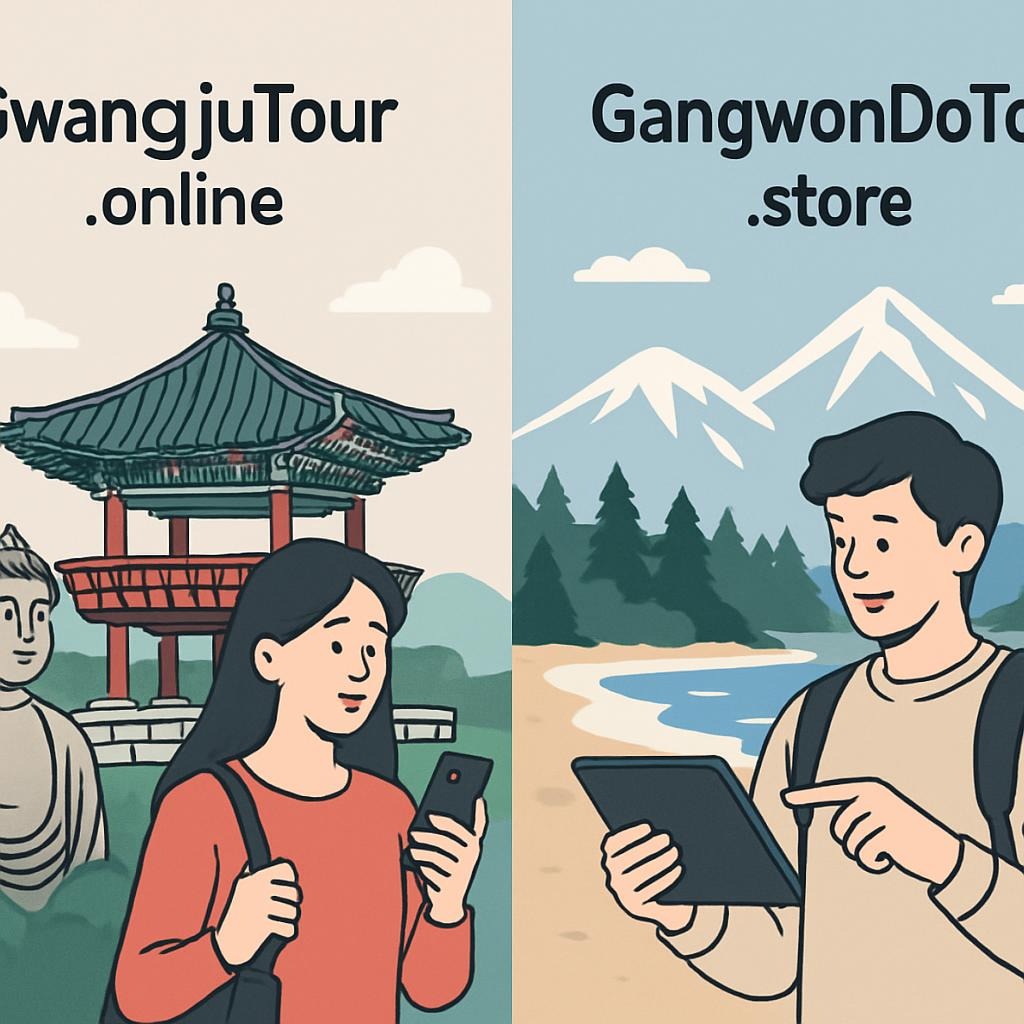
As travel planning increasingly begins online, regional platforms have taken on a vital role in shaping how people understand and experience a place. Beyond simple destination listings, well-designed regional travel sites communicate identity, atmosphere, and local value through the way they present information. Two examples of this naming-driven approach are GwangjuTour.online and GangwonDoTour.store.
Even without extensive visible content, these platform names alone suggest clear direction and purpose. They point toward region-focused exploration, cultural understanding, and experience-based travel rather than mass tourism. This article introduces both platforms through name-based analysis and explains how they can function as trustworthy, information-centered regional travel blogs.
[Why Regional Travel Platforms Matter]
Global travel websites often prioritize popularity and volume, which can result in generic recommendations. Regional platforms, by contrast, have the advantage of proximity—both cultural and conceptual. They can focus on everyday experiences, lesser-known destinations, and the rhythm of local life.
Names like GwangjuTour and GangwonDoTour immediately establish geographical relevance. They help users understand that the content is curated around a specific region, increasing perceived credibility and usefulness.
[GwangjuTour.online: Culture, History, and Modern Urban Identity]
The name GwangjuTour.online brings together three meaningful elements:
- Gwangju: a city known for its cultural depth, democratic history, and artistic identity
- Tour: exploration through experience rather than surface-level sightseeing
- .online: accessibility, openness, and digital-first guidance
Together, these elements suggest a platform that introduces Gwangju not simply as a destination, but as a living city with stories, values, and creative energy.
From a conceptual standpoint, GwangjuTour.online has strong potential as a cultural travel guide. Gwangju is often associated with art, food, and civic history, making it ideal for content that emphasizes understanding and context.
Suitable informational content for a Gwangju-focused platform may include:
- Introductions to local art districts and cultural spaces
- Historical context explained in accessible language
- Food culture and everyday dining experiences
- Walking routes that connect neighborhoods and landmarks
- Seasonal events and community-centered festivals
By focusing on explanation rather than promotion, such a platform can help visitors connect emotionally with the city.
[Digital Access and the Meaning of “Online”]
The use of the domain extension .online reinforces the idea that GwangjuTour is designed for continuous access. Travelers today often research before arriving and continue seeking information during their stay.
An online-first platform supports this behavior by offering clear, readable, and practical content that can be accessed on mobile devices without friction. This accessibility enhances trust and usability.
[GangwonDoTour.store: Nature, Space, and Slow Travel]
The name GangwonDoTour.store conveys a very different, yet complementary regional identity.
Gangwon Province is widely known for its mountains, forests, coastline, and seasonal beauty. The name suggests:
- Gangwon-do: a province associated with nature and outdoor experiences
- Tour: journeys shaped by environment and movement
- .store: a curated collection of ideas, routes, and regional insights
Rather than implying commercial transactions, the term “store” can be interpreted as a repository—a place where information is gathered, organized, and offered thoughtfully.
[Gangwon Province as a Travel Philosophy]
Travel in Gangwon-do is often slower and more reflective. It invites visitors to engage with landscapes, weather, and rhythm rather than packed itineraries.
A platform named GangwonDoTour.store aligns naturally with content such as:
- Nature-based travel guides and hiking routes
- Seasonal changes and how they affect travel planning
- Small towns and lesser-known coastal areas
- Wellness-oriented travel experiences
- Advice on pacing, rest, and immersion
This type of content positions the platform as a guide for mindful travel rather than checklist tourism.
[How Naming Shapes User Expectations]
Both platform names set expectations before any content is read. Users anticipate regional expertise and locally grounded perspectives.
Clear naming helps reduce skepticism. When users feel they understand a platform’s focus immediately, they are more likely to trust the information presented.
[Information Over Promotion]
Modern travelers are increasingly wary of exaggerated claims and sponsored lists. Platforms like GwangjuTour.online and GangwonDoTour.store benefit from adopting an informational tone.
Effective regional travel blogs typically:
- Explain why a place matters
- Provide context rather than rankings
- Avoid urgency-driven language
- Focus on experience, not sales
This approach supports long-term credibility and encourages repeat visits.
[Connecting Travel With Lifestyle]
Travel is not separate from everyday life—it reflects how people rest, move, and observe the world. Regional platforms can explore this connection by addressing topics such as:
- How local environments influence daily routines
- The relationship between food, geography, and culture
- How seasonal rhythms shape local life
- Ways visitors can travel respectfully and sustainably
Such perspectives deepen understanding and make travel more meaningful.
[Consistency as a Trust Signal]
Trust grows through consistency. When tone, structure, and values remain stable across content, readers feel secure.
Both GwangjuTour.online and GangwonDoTour.store lend themselves to calm, structured writing styles that prioritize clarity and respect for the reader’s time.
[Long-Term Content Strategy]
For sustainable growth, regional platforms may focus on:
- Long-form guides rather than short promotional posts
- Educational storytelling
- Visual descriptions paired with practical advice
- Content that evolves with seasons and events
- Neutral introductions to experiences without comparison or competition
This strategy supports both user satisfaction and organic search visibility.
[Conclusion]
Based on name analysis alone, GwangjuTour.online andGangwonDoTour.storerepresent two distinct regional travel identities—one rooted in urban culture, history, and creativity, and the other shaped by nature, space, and reflective travel.
By prioritizing information, clarity, and local context over overt promotion, these platforms have the potential to become trusted regional guides. In a travel landscape increasingly driven by authenticity, place-based identity and thoughtful content remain the strongest foundations for credibility.





Your article helped me a lot, is there any more related content? Thanks!
Thank you for your sharing. I am worried that I lack creative ideas. It is your article that makes me full of hope. Thank you. But, I have a question, can you help me?